
The Hungarian parliamentary elections are coming. The campaigns are running. And once again, Hungarian women are watching the whole thing from the outside, their issues folded neatly into the category of "family policy," which is to say: how many children you are willing to have, and how much the state will give you for it. Reproductive autonomy, gender-based violence, the wage gap. Present, urgent, and treated as though they belong to someone else's election.
NEM! (Nők Egymásért Mozgalom, “Women for Each Other Movement”) has been refusing that logic for years. In a country with almost no organised feminist presence, NEM! has spent the lead-up to these elections doing what they always do: finding ways to be heard in a system that would prefer they weren't. I had the opportunity to speak with Noémi Szili, one of the founding members and the organisation's longest-standing active voice, about what that work actually looks like from the inside.
Building Something from Nothing
It started in 2018, as many things do, almost embarrassingly spontaneously. A Facebook group called something like "Down With Abusers." A first meeting. The quick realisation that there is very little you can legally do about the problematic men in your immediate circles once the legal window has closed. So instead of stopping there, a handful of energetic women went to Lake Balaton for a few days and decided to build something real. Name, logo, direction: all decided over a long weekend.
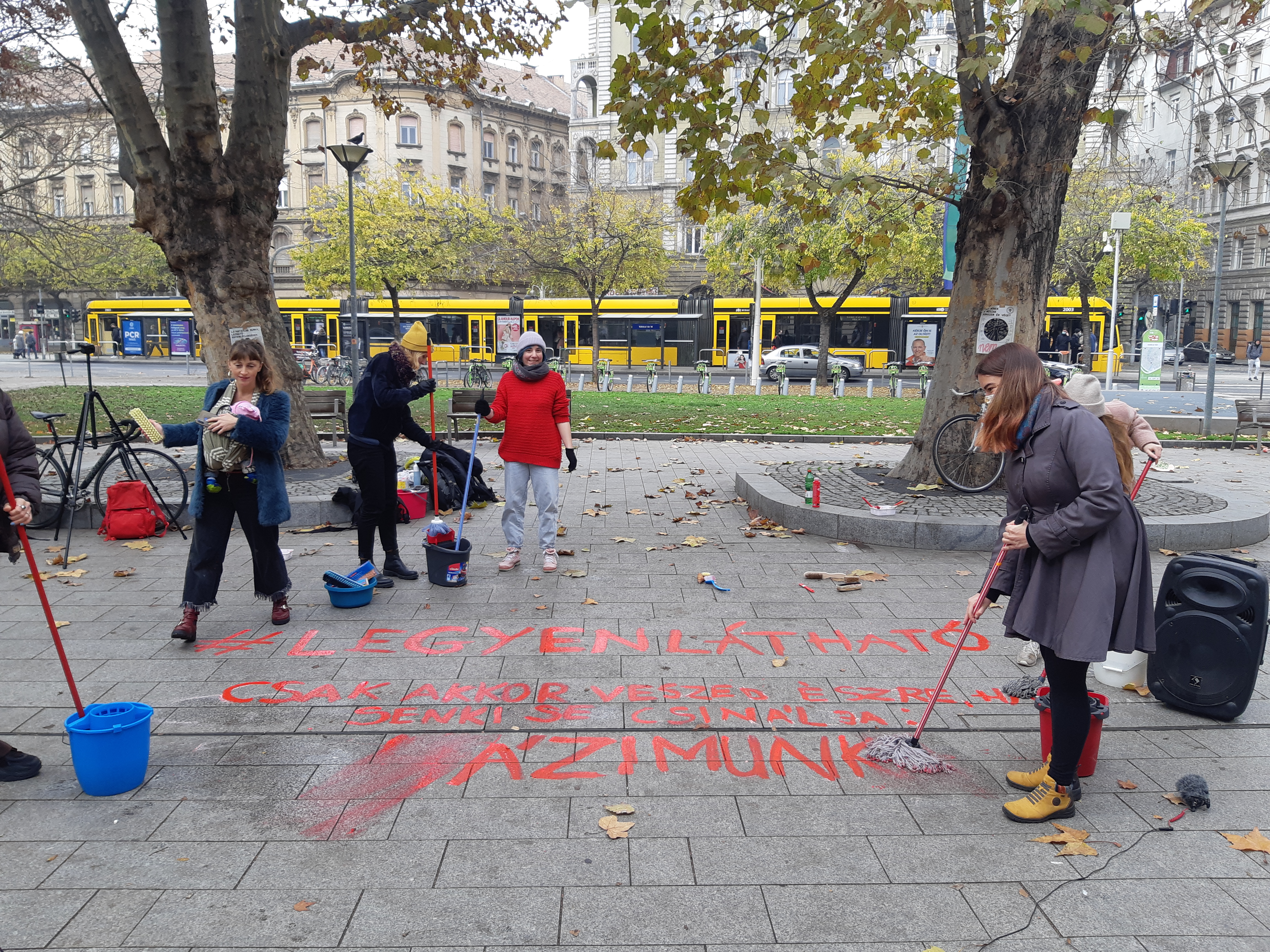
The early years were about period poverty. Collection boxes in bars and cafés, online campaigns, donations going to girls' homes across the city, but they outgrew it. Other organisations moved into the space, reach was limited, and NEM! wanted to go deeper. They shifted to a campaign model, one big theme per year, each building on the last. Invisible labour, care work, paid and unpaid. The membership shifted along the way too: people left for other organisations, went abroad, had children. But NEM! stayed in touch with almost all of them, which means they ended up with a wider network than they ever planned for.
The Ten Points that the Electoral Campaigns Left Out
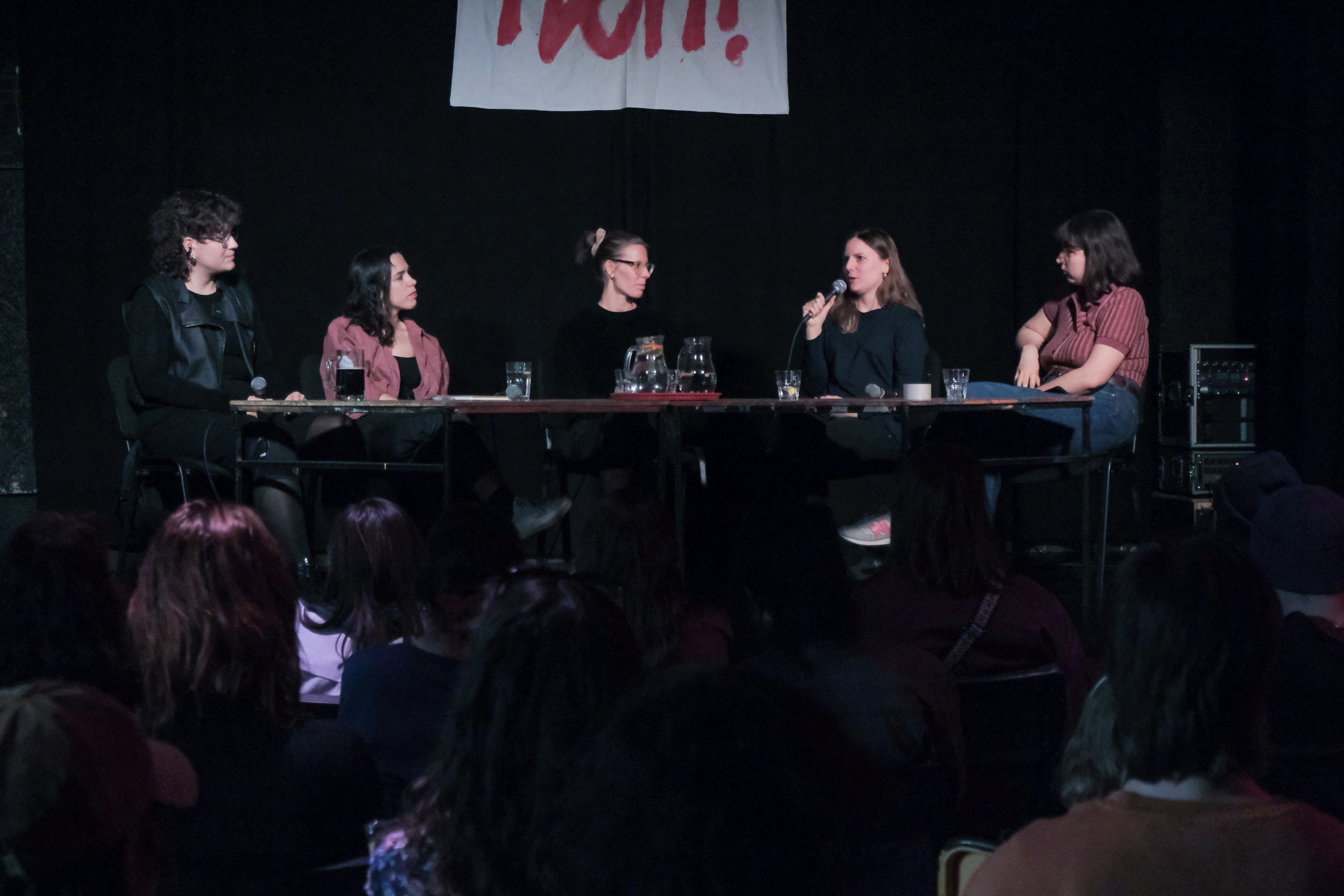
The latest campaign, the “Női Minimum” (Female Minimum), undoubtedly is the most ambitious thing NEM! has put together. Seventeen local women's organisations spent months negotiating and compressed more than forty initial proposals into ten: the bare minimum they are asking any government to address. The campaign’s ambition is straightforward. When journalists interview politicians, when they write up electoral manifestos and sketch out campaign debates , these ten points should at least be mentioned:
- Consent: legal recognition of consent culture and criminalisation of revenge porn
- Dignity in childbirth: official recognition of obstetric violence and guaranteed right to a birth companion
- Sex education: mandatory, age-appropriate relationship and equality education from first grade
- Reproductive access: over-the-counter morning-after pill and reduced taxes on contraceptives and sanitary products
- Abortion rights: repeal of the "heartbeat regulation" and access to medical abortion
- Care work: paid recognition of care work regardless of family structure, inflation-linked childcare benefits
- Equal pay: meaningful implementation of the EU pay transparency directive and wage increases in the social sector
- Poverty: a pension system that accounts for women's life paths and more women-only housing solutions
- Political representation: guaranteed meaningful representation of women in decision-making at all levels
- Enforcement: existing laws must be enforced in practice, not just on paper
What the campaign is also meant to make visible is something that keeps getting buried. The organisations involved, and two trade unions, have spent years developing policy proposals, trying to get meetings, trying to sit at tables where decisions actually get made. They were not welcomed.
"It's not that no one has spoken to politicians," Noémi says. "It's that they weren't interested, weren't open." The real problem was never a lack of advocacy.
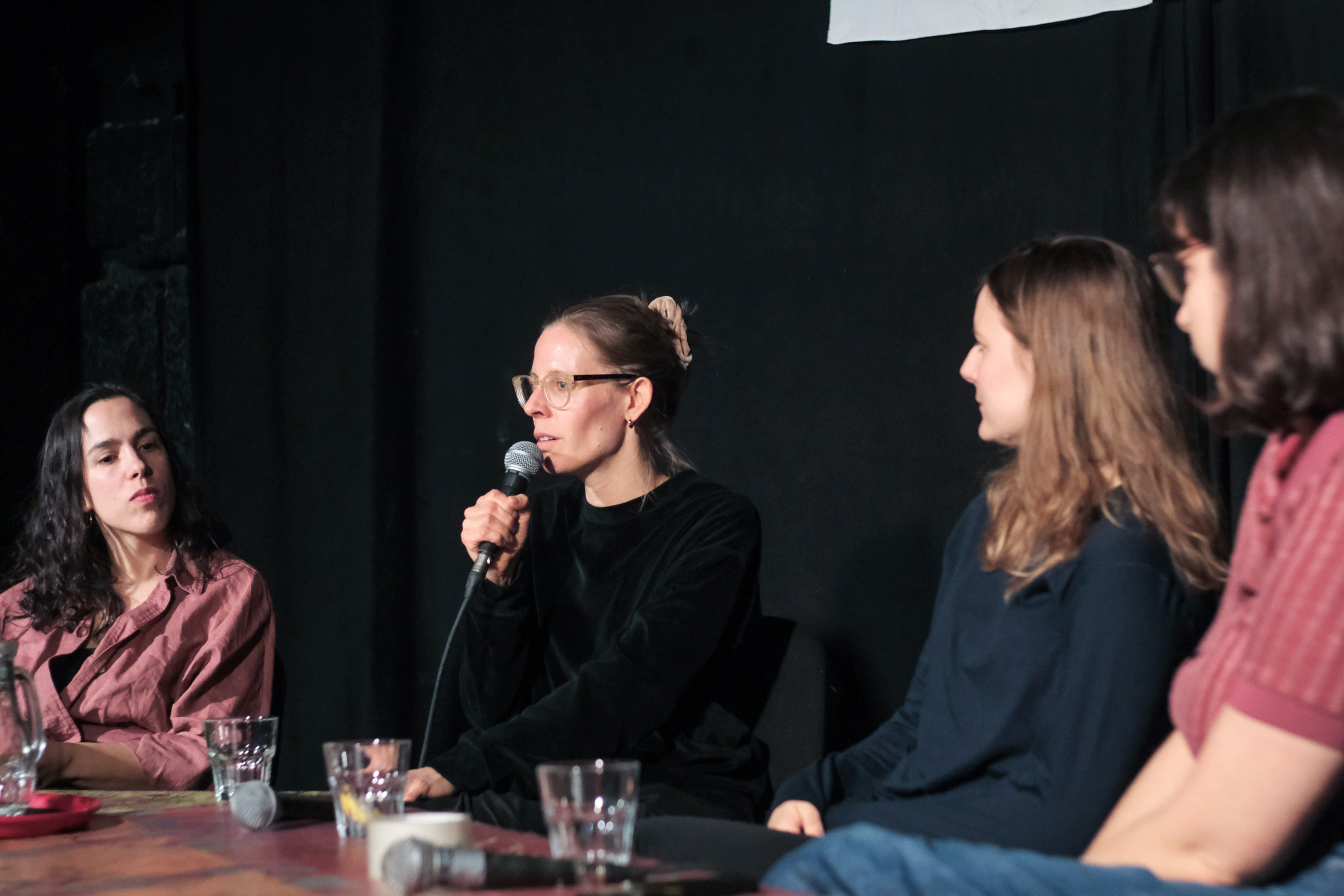
The Invisible Cage
What often goes unnoticed is how much ground women have lost economically. The narrative that a woman's place is in the home is making a comeback among right-wing politicians, dressed in the language of “family support”. And Orbán has been the pioneer of such narrative. Loan schemes and subsidies structured around how many children you produce. Whether you stay home. Whether you fit their model: married, heterosexual, employed, and willing to have more than one.
The infrastructure for actually returning to work after having a child remains completely unsolved, and only around 20% of Hungarian children under the age of three are enrolled in any formal childcare. For many mothers, this turns the question of going back to work into an additional problem, rather than an actual choice. If a nursery place doesn’t exist nearby and private care costs more than a monthly salary, staying home remains to be the only available option. What makes it so difficult to fight is that the illusion of equality is maintained throughout.
"There is no law preventing someone from going back to work after maternity leave. They just don't get hired. There is no law stopping someone from leaving an abusive partner. But if they took out a joint family loan and had a child together, leaving means repaying the full subsidy."
An invisible, economic entrapment, growing quietly inside policies being celebrated as “progressive family values” that pretend to be empowering women.
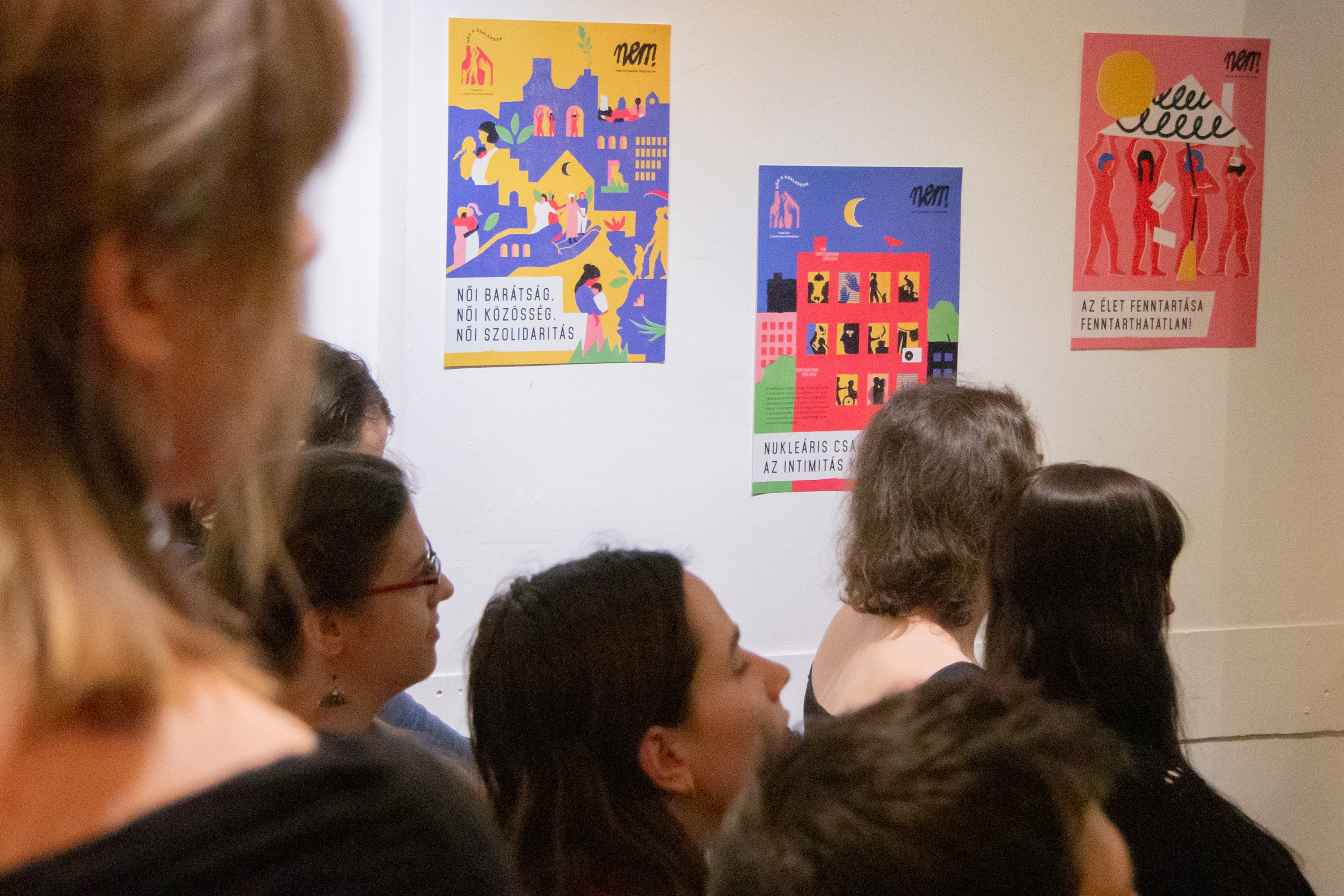
The Third Option Nobody Talks About
Hungary's relationship with feminism is shaped by something Western movements largely weren't: state socialism and its legacy. Under it, the official line was that equality already existed. The working woman and the working man, side by side. What went dismissed was that the working woman also went home and did everything else. Disobedience wasn't an option under such a regime, and so an entire conversation never happened.
The result is that many people find themselves stuck between the Orbán-led right-wing model, where women serve primarily as mothers, and the socialist-era model of formal equality that papered over everything real. However, this is not only what the government says.
According to OECD, 78% of people in Hungary agreed that "the most important role of a woman is to take care of her home and family", which is after Bulgaria, the second highest rate in the entire EU. Understandably, many cannot imagine that a third way exists, and in both models, the woman ends up in the kitchen. The only question is whether she also has a job. "Or whether the father is sometimes in the kitchen too."
Whoever Wins in April
Ask NEM! what they expect from the elections, and the answer is a particular kind of resignation that comes not from despair but from experience. A change of government would, in theory, matter from a practical standpoint: funding channels that have been narrowing under Fidesz might reopen, and some of the few grants NEM! has accessed, including through the Hungarian Women's Foundation (Magyar Női Alap), could survive. But the deeper issue, the one that shapes every campaign they run, is not a problem that Orbán created exclusively. There is no left-wing party in Hungary in any meaningful sense, and the opposition has shown little appetite for making women's rights a serious part of their platform either.
"The programs don't reflect this area," Noémi says, "and the same questions, the ones I would call human rights questions rather than women's policy, go unaddressed either way." The elections feel, she admits, like having a tooth pulled. Necessary, perhaps. Not exactly hopeful.
Anger, and Good Company
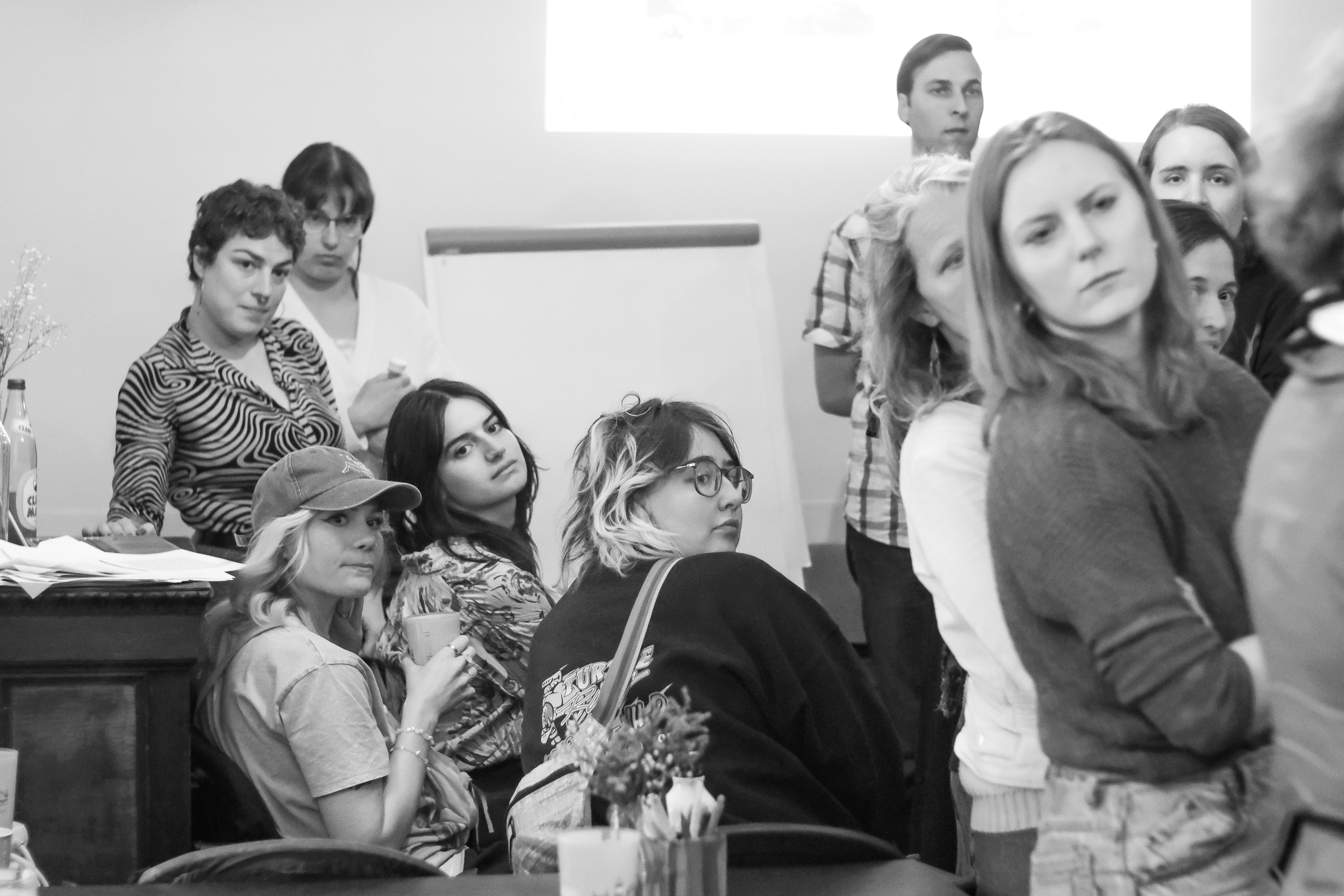
What keeps NEM! going is, in Noémi's words, exactly that. "Anger, and good company." The Női Minimum program would be extraordinary if it actually happened. Nobody is certain it will, not in full, not soon. But working toward it matters. A place for the energy to go. And every two weeks there are meetings, good people, sometimes a beer after.
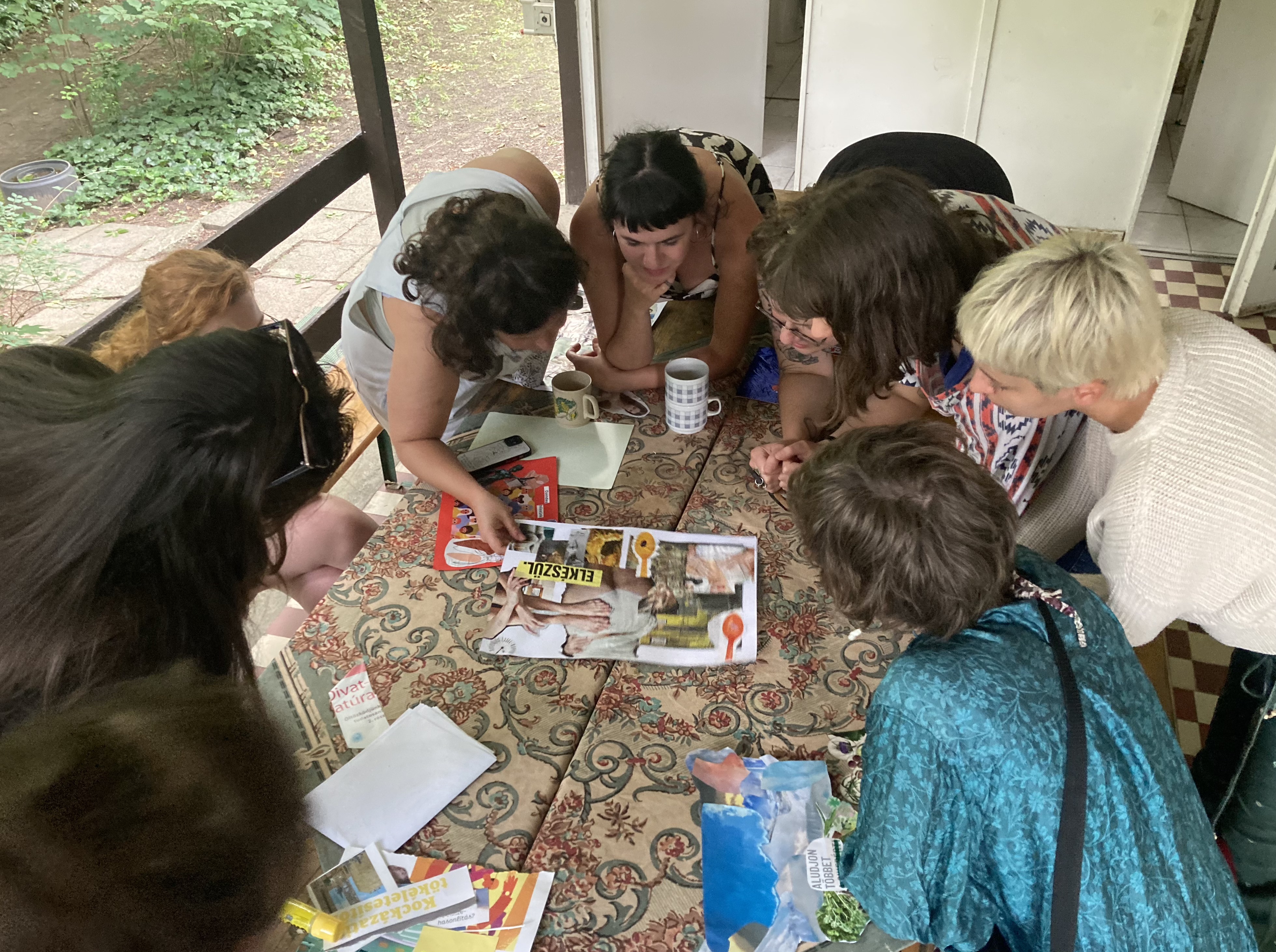
And then there are the events. Women arrive who have never been to anything like this before. Uncertain, a little tentative. Then something shifts. They realise that the exhaustion they have been carrying, the sense of constantly falling short, is not a personal failure. It is structural, and the system is designed to make things hard for them. "The closer someone gets to that realisation," Noémi says, "the closer we are to this country becoming a little more liveable." We are not there yet. But NEM! is still in the room.