


Iva Parađanin Lilić, Founder of Tampon Zona: “Feminism must belong to every woman in Serbia”
Tampon Zona has become one of the most recognizable gender-aware platforms in Serbia and across the Balkans, focusing on the everyday realities and structural challenges women face.
Parađanin Lilić explains that the idea for the podcast — and later the entire platform — was sparked by the fact that women make up only about one-fifth of media content in Serbia. According to the Global Media Monitoring Project 2025, this data does not apply only to Serbia but represents a global trend.
“That imbalance shapes how we see the world and sends a message to girls that their voices do not matter. It also reinforces a long-standing and socially desirable image of women: confined to lifestyle and entertainment sections, or reduced to sexualized roles. We have not progressed far in how women are represented in the media. I wanted my platform to show what a woman truly is, in all her complexity — above all, to make her visible and to make her voice heard. Claiming space is a fundamental principle of the feminist struggle, and I saw my mission precisely in creating that space in the media,” she says.

Breaking Away From a Larger Production
Tampon Zona was launched in 2019, initially as a podcast within the Serbian media production Mondo. After several years, Parađanin Lilić decided it was time to break away and build an independent platform.
“I moved from sports journalism, where I first experienced discrimination, to working in large magazines where I encountered censorship. I realized that editorial teams often treat feminism as a passing trend rather than as a fundamental political issue. That pushed me to create something completely different — a space based on trust and an honest relationship with the audience. Within large mainstream systems, where you are just one section among many, there was no room for the kind of change I wanted to achieve,” she explains, adding that shifts in editorial policy further accelerated her decision.
“Earning the trust of women was the number one focus. For that, I knew I needed to avoid sensationalism, misrepresentation, and shock value,” Parađanin Lilić emphasizes.
Horizontal Decision-making as a Core Value
For independent media in Serbia, survival has become increasingly difficult. Political pressure, especially following the collapse of a railway canopy in Novi Sad in November 2024 and the mass protests that followed, has intensified financial insecurity, threats, intimidation, and physical attacks on independent outlets. In such conditions, internal solidarity and healthy working environments become essential.
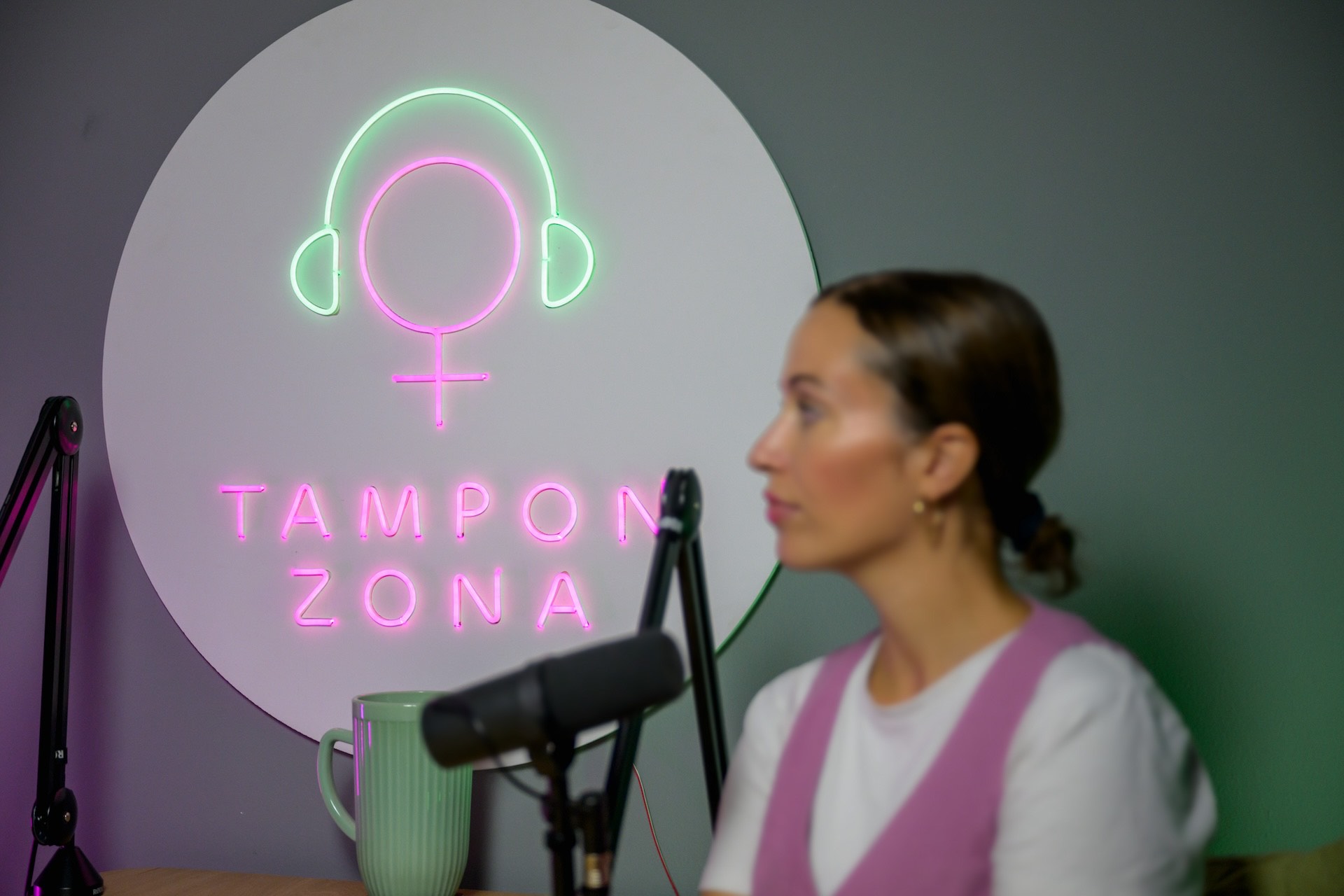
“The core of our team consists of Maša, our community engagement manager, Milena, who manages operations beyond content, and me. We also collaborate with a graphic designer, a permanent network of local correspondents, and the Agelast production studio where we record. I cultivate a space where difficult and ‘uncomfortable’ topics can be discussed openly. Responsibility comes from the awareness that we are working toward something larger than ourselves. Our team does not function through rigid hierarchy — a platform that advocates equality must practice it internally. That is why horizontal decision-making lies at the heart of our work,” she explains.

Connecting with Listeners
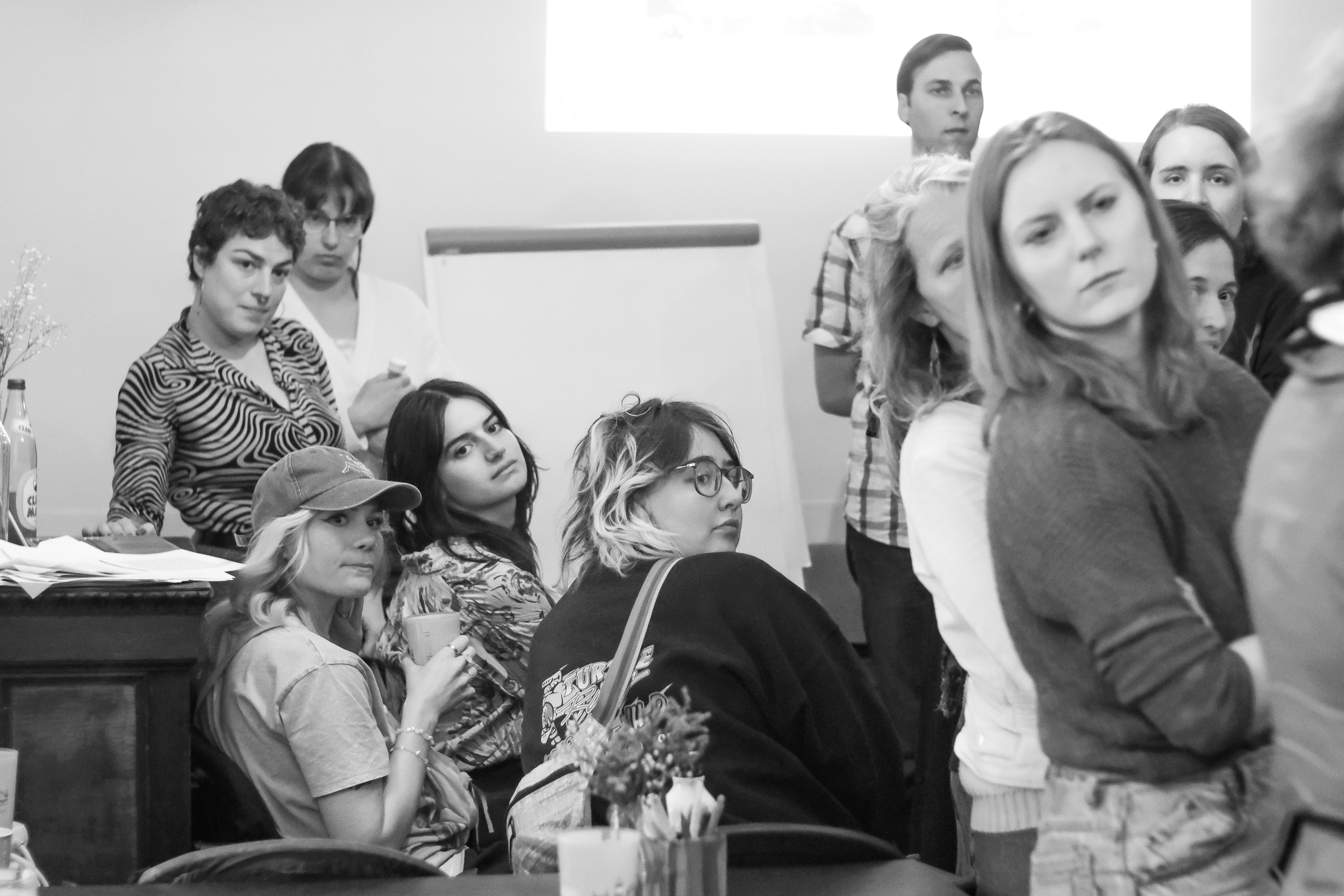
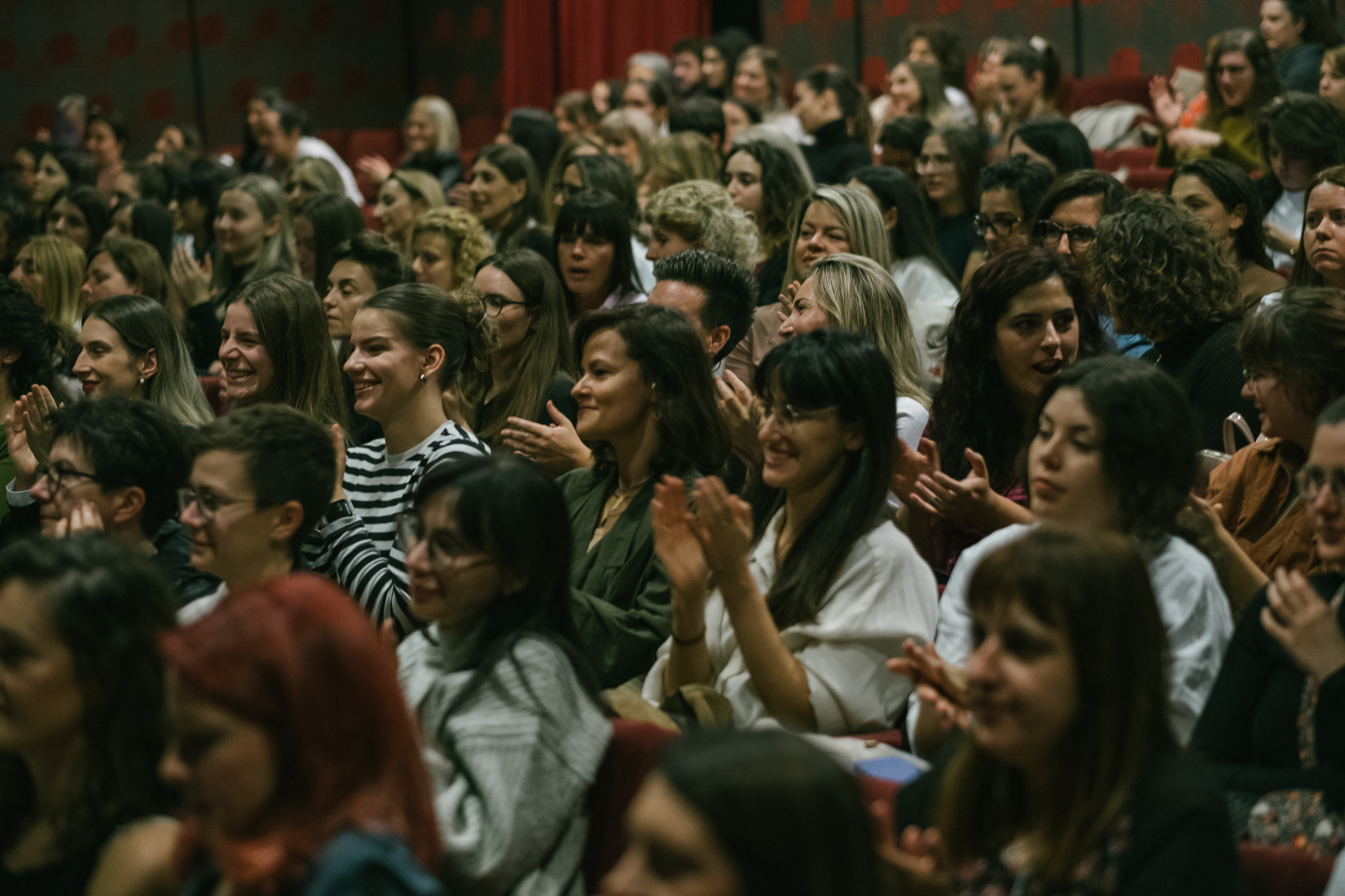
Tampon Zona is not only an online platform but also a growing offline community built through live recordings, public discussions, and events.
“These encounters are always emotional and powerful. People rarely leave unchanged — often with at least one new friend and a renewed sense of connection,” Parađanin Lilić says, pointing to the tangible impact of the platform.
“Recently, we were among the few media outlets that covered a case in which women in a small Serbian town were reported that they could access gynecological examinations only if they were affiliated with the ruling political party. I also keep a document that tracks our impact — it is one of the most valuable things we have created. A cashier in a local store once thanked me for an episode on menopause and said she finally felt seen. Moments like that confirm that we are doing meaningful work.”
In one of her previous interviews, Iva noted that during some meetings with listeners, women openly shared their uncomfortable experiences from family life, intimate relationships, or other environments, which is why gatherings of this nature are not recorded. Speaking out goes against patriarchal “rules,” according to which women are expected not to share their problems and to accept everything that happens to them as normal. They are expected not to raise their voices. Tampon Zona, it seems, also challenges this patriarchal framework by building a space of trust for women.
“A space like this is protected by ensuring that we ourselves are not always at the center of the story, but rather diverse women’s experiences, and by remaining aware of them and in solidarity with them. Media literacy and a sensitive, responsible approach to these topics are also pillars that will always sustain us,” Parađanin Lilić says.
Amplifying Local Voices
Women in large Serbian cities often have more opportunities to challenge patriarchal norms and shape their lives outside rigid social expectations. In smaller communities, however, such opportunities remain limited. Recognizing this gap, Tampon Zona expanded last year through Tampon Zona Lokal, a network dedicated to stories from local communities.
“For me, feminism cannot remain a privilege of urban centers — it must belong to every woman in Serbia. The absence of a gynecologist in a municipality or the daily struggles of women in rural areas are first-rate political issues that deserve public attention. Through our network of local correspondents, we do not speak about women — we create space for them to speak for themselves. In this way, we break media silence and highlight that real change begins where institutional support has failed the most,” she explains.
Before Tampon Zona Lokal began operating, the local correspondents underwent training where they learned how to report sensitively on delicate women’s issues and how to approach interviewees who had experienced violence or other distressing situations. The platform has since produced high-quality stories that have received significant attention on social media and brought the problems faced by women in smaller communities into focus.
“This is our way of decentralizing truth and sending a message to every woman, regardless of where she lives, that she is not alone and that her experience matters,” Iva says.
Motherhood Through Humor
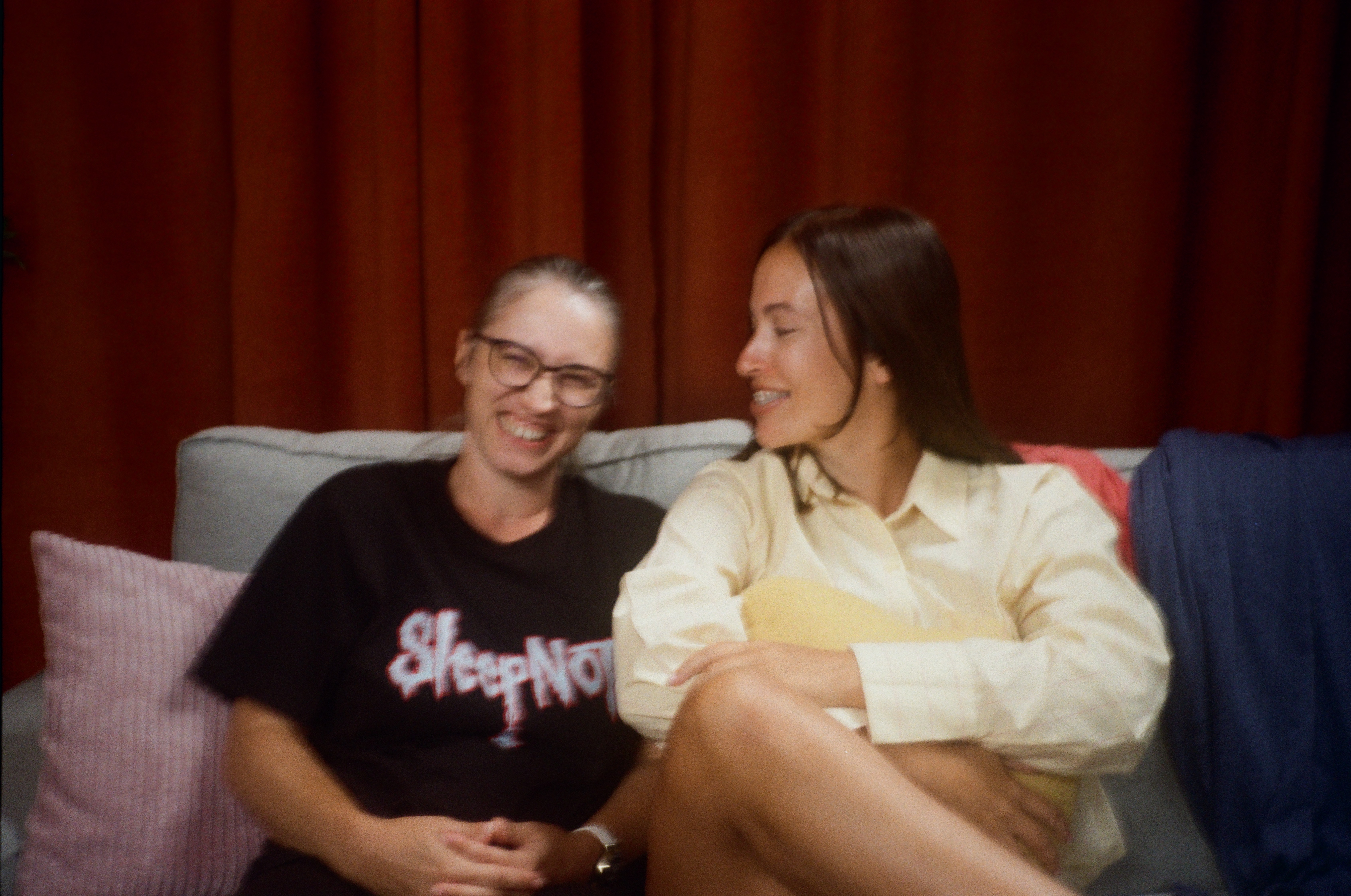
The belief that a woman must fulfill herself primarily through motherhood — and that this role should come naturally and without difficulty — remains deeply embedded in Serbian society. As a mother herself, Parađanin Lilić chose to address these pressures through humor in a new series titled JOJ MAJKO(“Oh, Mother!”).
“This project came from personal need. For a long time, I avoided bringing my identity as a mother into public discourse, even though it is an essential part of who I am. Media spaces are saturated with advice about perfect parenting and constant judgment. My co-host Bojana and I wanted to create a counterbalance — to speak honestly about mistakes, exhaustion, and imperfection as normal and inevitable experiences,” she says.
The Desire For Change Stronger Than Fear
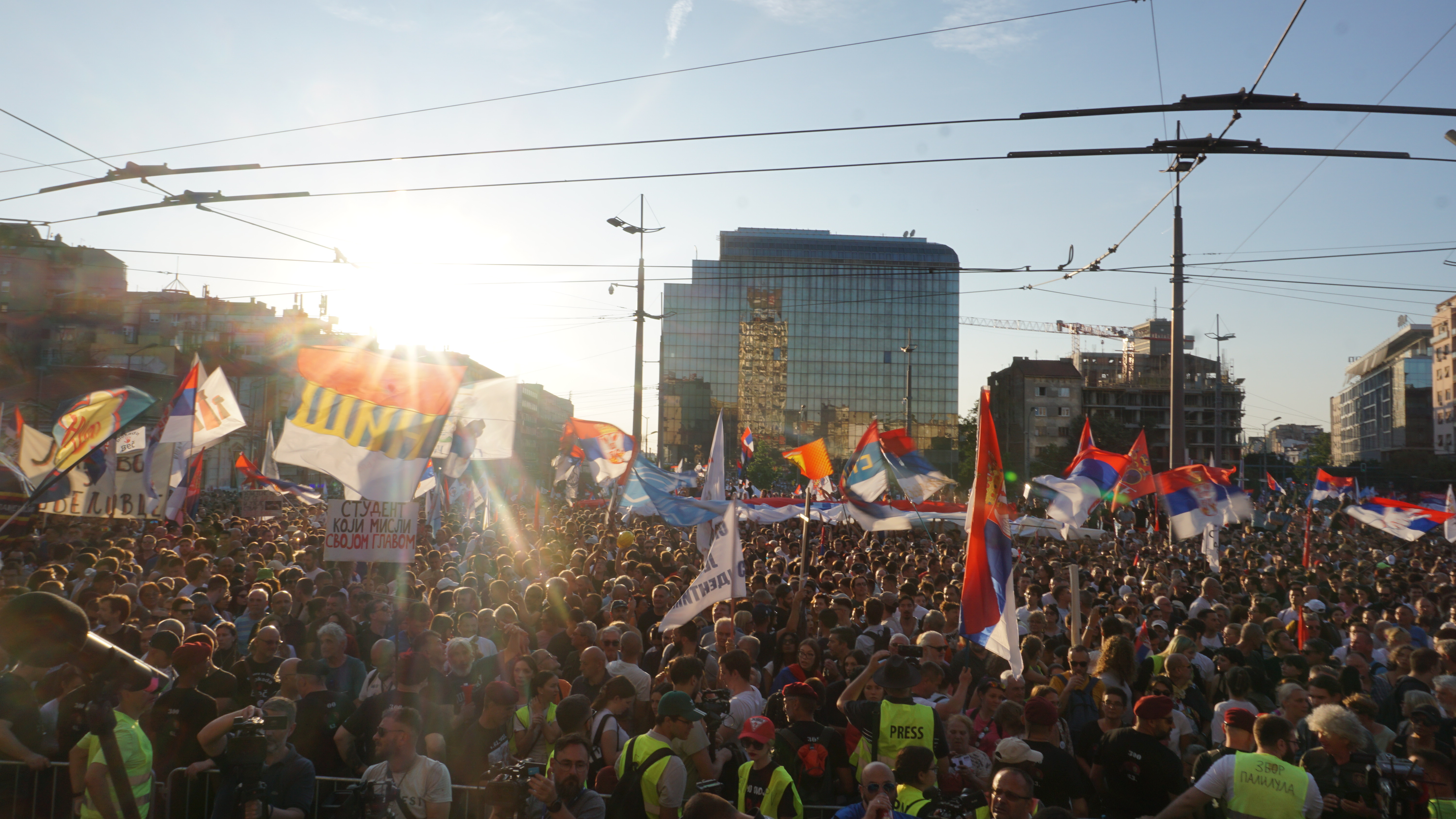
Women have played visible roles in recent protests across Serbia, both as activists and as journalists reporting from the field. Many have faced detentions, interrogations, and physical attacks. From the beginning, Tampon Zona publicly supported the student movement.
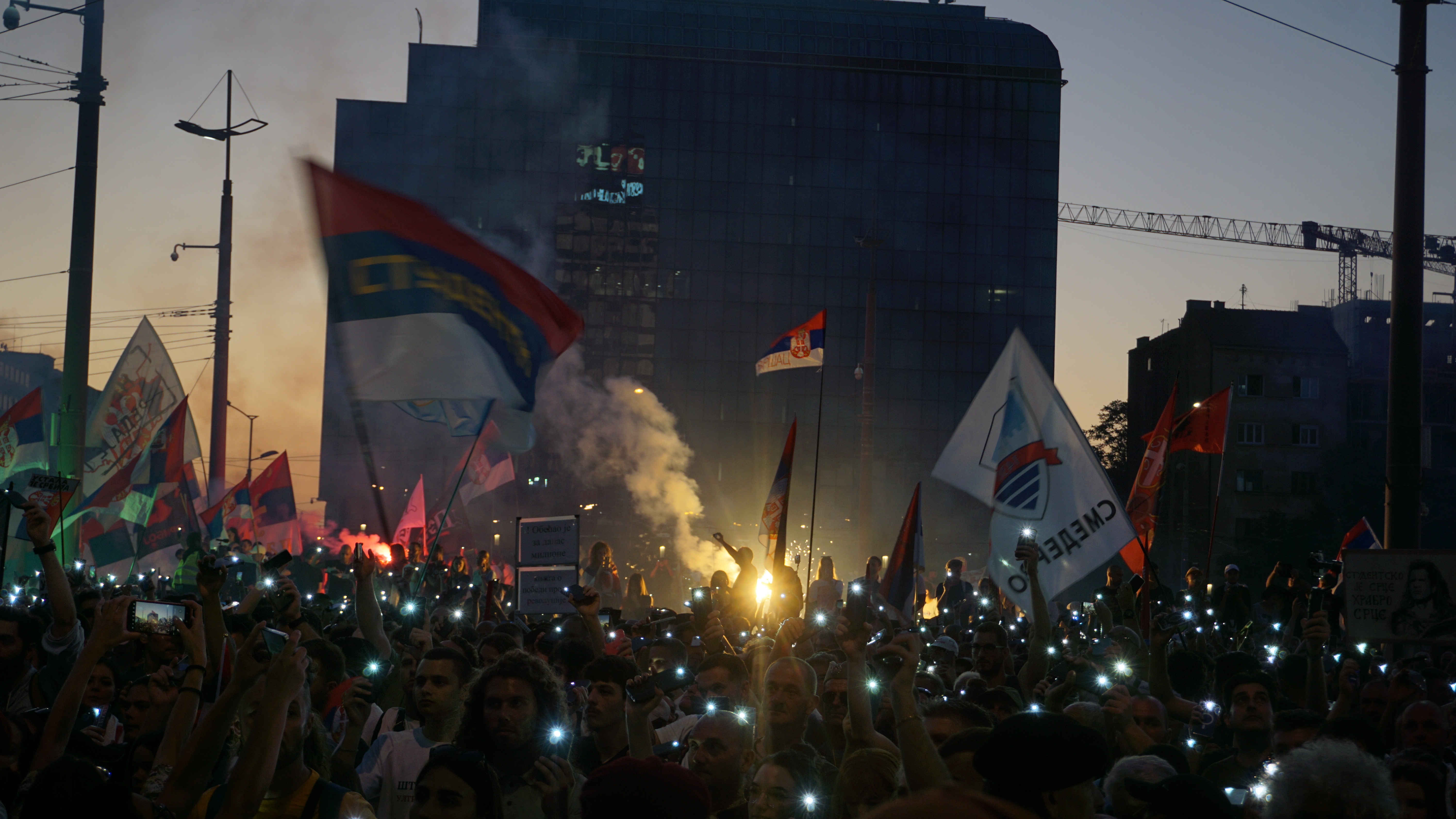
“I feel that fear has largely been overcome. Pressure and injustice have accumulated to the point where anger and the desire for change have replaced fear. We are currently witnessing mass shutdowns of independent media accounts and growing digital censorship. We have been targeted several times by pro-government outlets. For me, this only confirms that we are on the right side — and that our content is political by nature and always will be,” Parađanin Lilić says.

“Start with Silence and Listening”
Tampon Zona stands as an example of how independent media can initiate social change, even within deeply entrenched patriarchal structures.
“My most important advice to women who want to create their own projects is to start with silence and listening. We often think a safe space is created by speaking the loudest, but it is actually built through the ability to truly hear those who have been silenced for decades. Listen carefully to what lies beneath words — that is where the most important stories begin,” she concludes.