

In 1998, doctor and psychotherapist Ilinka Serdarević took a controversial step: she founded Terra Association in Rijeka, launching one of Croatia’s first harm reduction programs and a needle exchange initiative for heroin users. At the time, even friends and colleagues questioned her approach. Almost three decades later, her daughter, Maša, faces a similar uphill battle, advocating for drug-checking services within the public health system. Just as the needle exchange program helped curb the spread of HIV and hepatitis C in the 1990s, drug checking could play a crucial role in reducing risks for today’s recreational drug users. Yet public opinion remains divided, and stigma continues to shadow conversations around substance use.
Harm Reduction, Then and Now
Harm reduction is a public health approach aimed at minimizing the negative consequences of drug use without necessarily requiring abstinence. It includes strategies from education and counseling to safer consumption practices and drug checking, all designed to keep people alive, healthy, and informed.
During the Croatian War of Independence, the country faced a potential HIV and hepatitis C epidemic among intravenous heroin users. As the number of users rose with around 980 new heroin addicts every year (early 1990s: ~0.9 per 1,000; late 1990s: ~2.7 per 1,000), organizations in Zagreb, Split, and Rijeka stepped in. In Rijeka, the response came from Terra Association, founded in 1998 by Ilinka Serdarević and her team. While Split had already begun needle exchange programs, Rijeka saw heroin arrive later, requiring a tailored response.
Today, although Ilinka could retire, she continues working with people of all ages on mental health issues. Terra has evolved into a broader association, maintaining its Drop-in Centre while introducing general counseling. Alongside traditional programs like needle exchange, Terra launched Tripsitters, advocating for drug checking and nightlife outreach. The initiative responds to rising recreational drug use, as heroin addiction rates have declined over the past two decades.
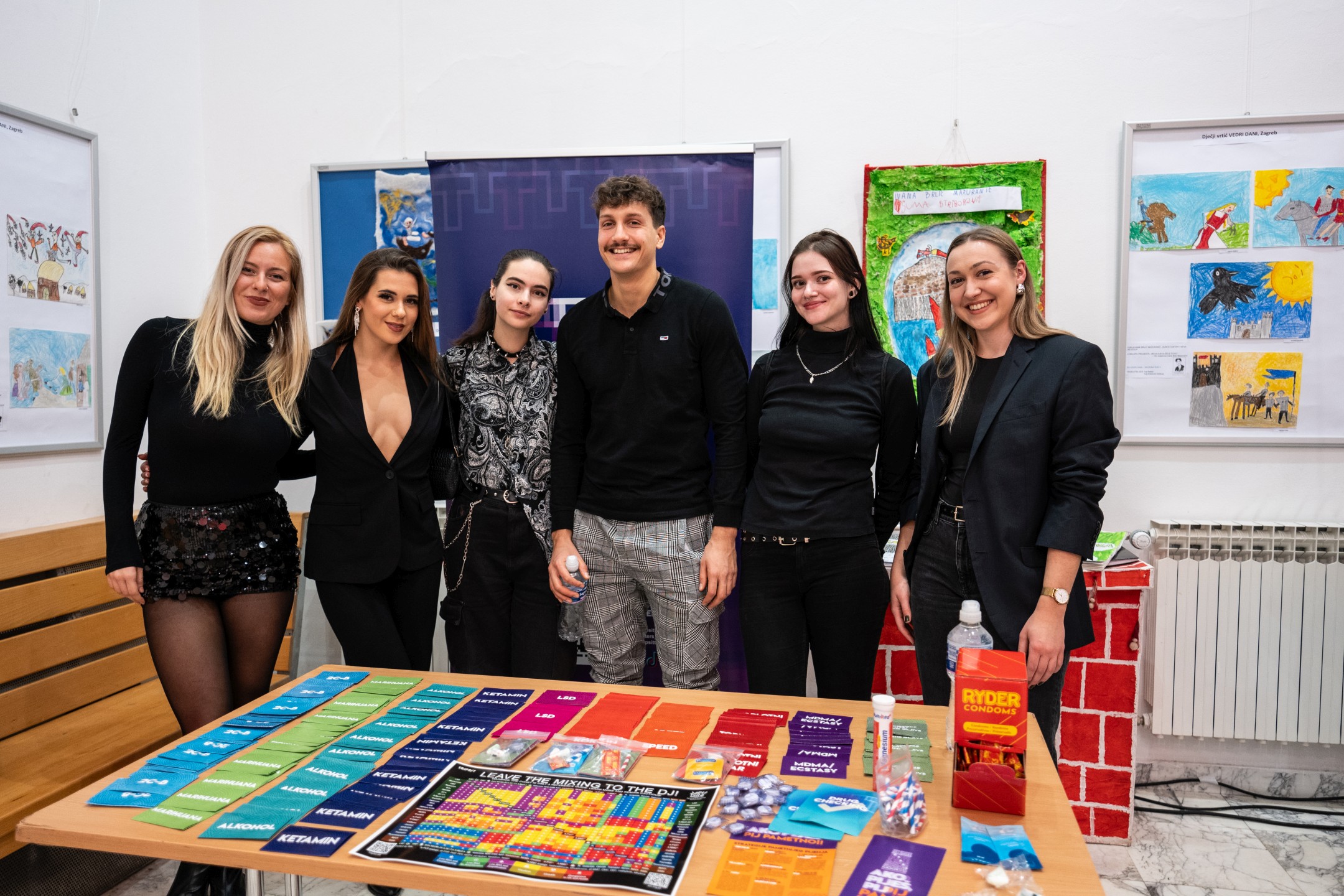
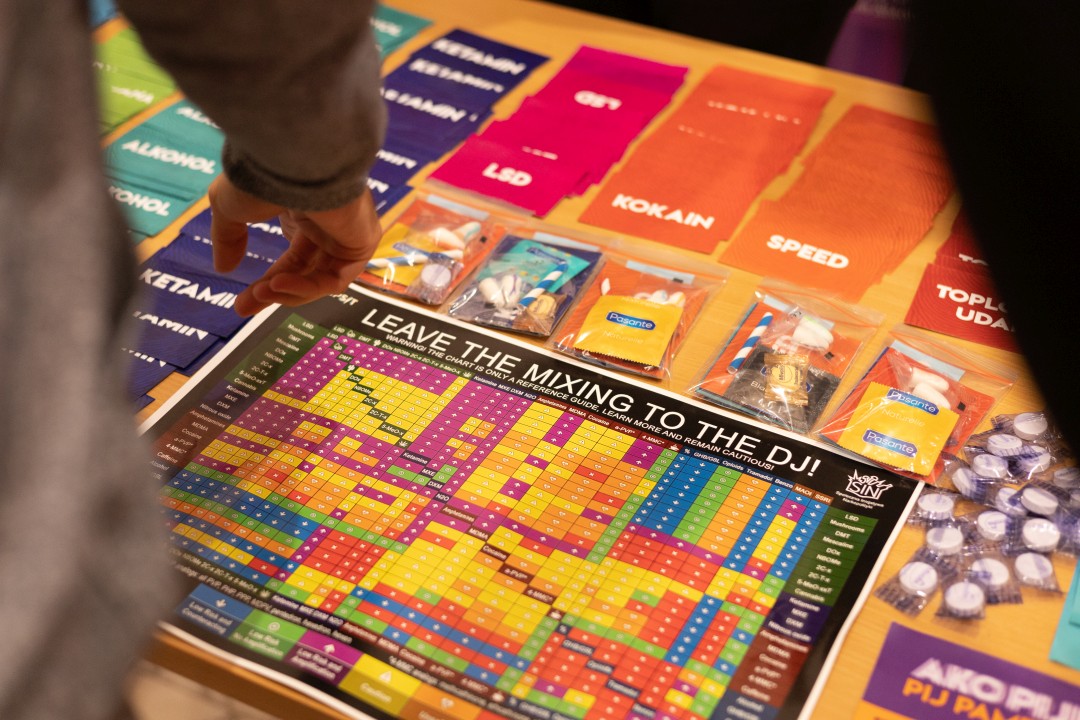
Led by Maša Serdarević and her partner Andrej Rupnik, Tripsitters relies on volunteers in Rijeka and Zagreb who visit festivals, clubs, and events to provide education and support. The initiative also aims to establish official drug checking sites, already common in over 20 European countries, including Austria, Germany, the Netherlands, and Slovenia.
Drug checking allows users to test the composition and purity of substances before consumption, helping reduce risks and prevent harm.
Rising Use, Slow Policy: The Case for Harm Reduction in Croatia
In Europe, around 2.7 million young adults (aged 15–34) reported using cocaine in the past year. According to the European Web Survey on Drugs – EWSD, cocaine use in Croatia has increased significantly over the past decade.
A topic-specific study, Substance Abuse in the General Population of Croatia: 2023 reported that cocaine use has increased more than fivefold since 2011, with the highest reported prevalence among young adults aged 25–34 (4.6 %) and significant use in 15–24-year-olds. This context is shaped by high substance use alongside slow policy responses. While neighboring countries implemented progressive harm reduction models, Croatia lagged behind, leaving gaps in public health protection. The legacy of heroin epidemics and emerging nightlife drug use illustrates an ongoing challenge: demand exists, risks are real, but institutional support remains limited. Public attitudes continue to stigmatize users, particularly women.
These initiatives fill gaps left by state institutions. The mother-daughter partnership highlights a gendered dimension: while policy spaces remain male-dominated, women have pioneered empathetic, non-stigmatizing approaches. Their work shows how values-driven leadership can shape adaptable programs.
Legal and political barriers remain. Drug checking is not formally sanctioned, and new patterns—from online gambling to novel substances—require constant adaptation. Social media and real-time communication have become essential tools. The Croatian experience shows that practical, experience-based solutions can work even within constraints.
The Origins of Care: From War Trauma to Drug Policy
On July 26, 2024, as the opening ceremony of the 2024 Summer Olympics was taking place in Paris, part of the public watched with discomfort. Drag performers, queer artists, and gender-fluid expression signified celebration for some, while for others, they triggered unease.
At the time, Ilinka was attending her elementary school anniversary in Skradin, a small Dalmatian town where she grew up. In her own words, it is “a traditional—if not conservative—environment, even nationalistic,” and she clearly remembers her shock “at how many people held prejudices against transgender and homosexual people, and against women.” The reaction stayed with her as a quiet diagnosis of a persistent distrust toward difference, although her interest in working with marginalized groups began much earlier, in her childhood.
“I was from a mixed-religion family, and at 11 years old, I remember not understanding the conflicts. My father and family were being attacked, and I wondered why I wasn’t part of that majority—I felt sad,” she recalls. From that, something else grew: the need to protect those who are marginalized.
The renowned psychotherapist enjoys watching films about the struggle for Black rights and about women who have made a difference in the world. When asked whether she considers herself a woman who has made a change, she responds: “I’ve never thought about it like that. I do think we made a change, but I never saw myself as someone doing anything other than my work, striving to do it as well as I could.”
At her heart, she is “always for minorities, those on the margins of society,” says Ilinka. For her, it is difficult to place herself within a specific feminist movement - radical feminism or others. Although she is aware that “for many feminists, that’s very important,” she explains that, as someone who does not like to belong to any group or party, it is hard for her “to fully belong to any one group by its rules.”
Working with refugees and displaced people in the 1990s, she encountered the psychological aftermath of conflict at close range. The experience was, as she describes it, the most formative and the most difficult period of her career. An association was founded to run these programs, but due to complications, it continued operating through the Red Cross.
That significant experience with refugees led Ilinka and her team to ask themselves: “When this issue was no longer as pressing, what did our city need?” A group of psychologists, medical doctors, and psychotherapists went directly to the then-mayor, Vojko Obersnel, who told them that Rijeka was facing a growing heroin problem. Unlike Split, Zagreb, and other parts of Croatia, Rijeka had been somewhat protected from drug inflow and was lagging about ten years behind.
“He suggested we could develop a program,” says the Terra Association founder, for whom this was not an easy step, as she “was still recovering from retraumatization caused by working with refugees and displaced people, which is demanding work. Then I thought, ‘Ilinka, you finished medicine—did you think you would only work with healthy, happy people?’”
At the time, heroin users were among the most stigmatized groups in Croatian society. “It was very demanding because heroin users were highly stigmatized and distrustful,” Ilinka explains: “We thought no one would come to us.”
So they began by building something simple: a space, an environment where people could enter without fear of judgement. At the same time, the team had to educate themselves from the ground up. “We started learning about addiction and heroin. I read Australian literature at the time—they had the best harm reduction program, and we learned from them”, Ilinka remembers.

What they were proposing, however, collided with legal and moral boundaries. Distributing clean needles, today a widely recognized public health measure, was then considered an illegal act, framed as “aiding drug use.” Even her friends didn’t support the idea. “Giving someone a clean needle was very controversial, although it protects not just users, but the broader population”, she recalls.
In Split, the epidemic had already left a mark. “When we did initial testing, 68% of drug users were hepatitis C positive,” she notes. Croatia, however, avoided a large-scale HIV crisis among people who inject drugs—something she attributes, in part, to early interventions. “Croatia never had an HIV epidemic, unlike Serbia and other countries. We can be grateful to Split for starting early”, says the NGO founder.
In Rijeka, timing worked in their favor. The program began just as heroin use was increasing, allowing harm reduction strategies to take root before infection rates escalated further. “Hepatitis C incidence dropped significantly,” she adds. Individual HIV cases did appear, but were already being treated within the healthcare system.
Over time, what was once an isolated effort became part of a broader network. Harm reduction organizations began to connect across Croatia and the region, sharing knowledge and practices. “During the heroin epidemic, we worked closely with neighboring countries,” Ilinka says. “We helped Montenegro establish a harm reduction program and hosted visitors from Serbia and Slovenia.”
Those collaborations still exist today, evolving alongside new challenges. “New approaches like drug checking and outreach are vital to adapt to changing needs, both in Croatia and abroad”, she says.

She Heals, She Suffers, She’s Still Judged
“The number of women using substances has grown,” Ilinka explains. In earlier years, the ratio was roughly one woman to every three men, she says. More women sought help. Today, it’s almost fifty-fifty. More young men are coming forward.
“Mental health issues have increased so much that professionals in Croatia now have as much work as they want”, says Ilinka, who is also the founder of the School of Cybernetics and Systemic Therapy, active in Rijeka and Zagreb.
One of the main gender-related differences is that women often enter with their partner’s substance, while men progress from alcohol to harder substances. Now, unlike twenty years ago, patterns are more about consumption than addiction. Yet increased visibility has not translated into greater acceptance. Quite the opposite. “Society is stricter toward women,” she says, adding that “mothers face stigma, family rejection, and fear.”
The double burden is difficult to ignore: women are both biologically more sensitive to substances and socially more harshly judged for using them. “Women are more sensitive to alcohol and drugs and often suffer faster,” she adds. “Some say women are more passionate addicts, but I don’t agree—that’s another harmful stereotype”, she says and explains: “There are many male sex workers, but we don’t label them as such. A woman who uses drugs is often labeled as both an addict and a prostitute.”

These dynamics extend beyond users themselves and into the professional spaces designed to support them. According to a report by the World Health Organization, women make up approximately 67% of the global health and social care workforce. Despite the fact that helping professions are largely composed of women, visibility and authority remain unevenly distributed. “At conferences and symposia on addiction, men still dominate,” she observes. “They hold the main speaking roles, while women often stay within their own circles.” The imbalance, she suggests, is not about competence. “I think we are just as competent, perhaps even more so, but they are the ones giving lectures.”
While detailed sector shares vary, Croatia follows the same pattern of gendered care work, with women carrying a disproportionate burden of both paid and unpaid care roles. Still, Ilinka’s response resists confrontation in its usual form. “I just wouldn’t want us to adopt ‘male methods’—war-like approaches. Our way is different, and perhaps that’s why progress is slower.”
“I think it is harder to be a woman in many aspects of life. I grew up being told I had to be independent and free, and that I had equal rights. But at some point, I started questioning why I had to do everything. I remember thinking: if my husband can wash the windows, then I don’t have to”, Ilinka continues. She says women may be more attached to their children: “If my daughter called me saying she wasn’t well, I would go home immediately. My husband wouldn’t. But I’ve allowed myself that choice.”

Two Generations, One Approach
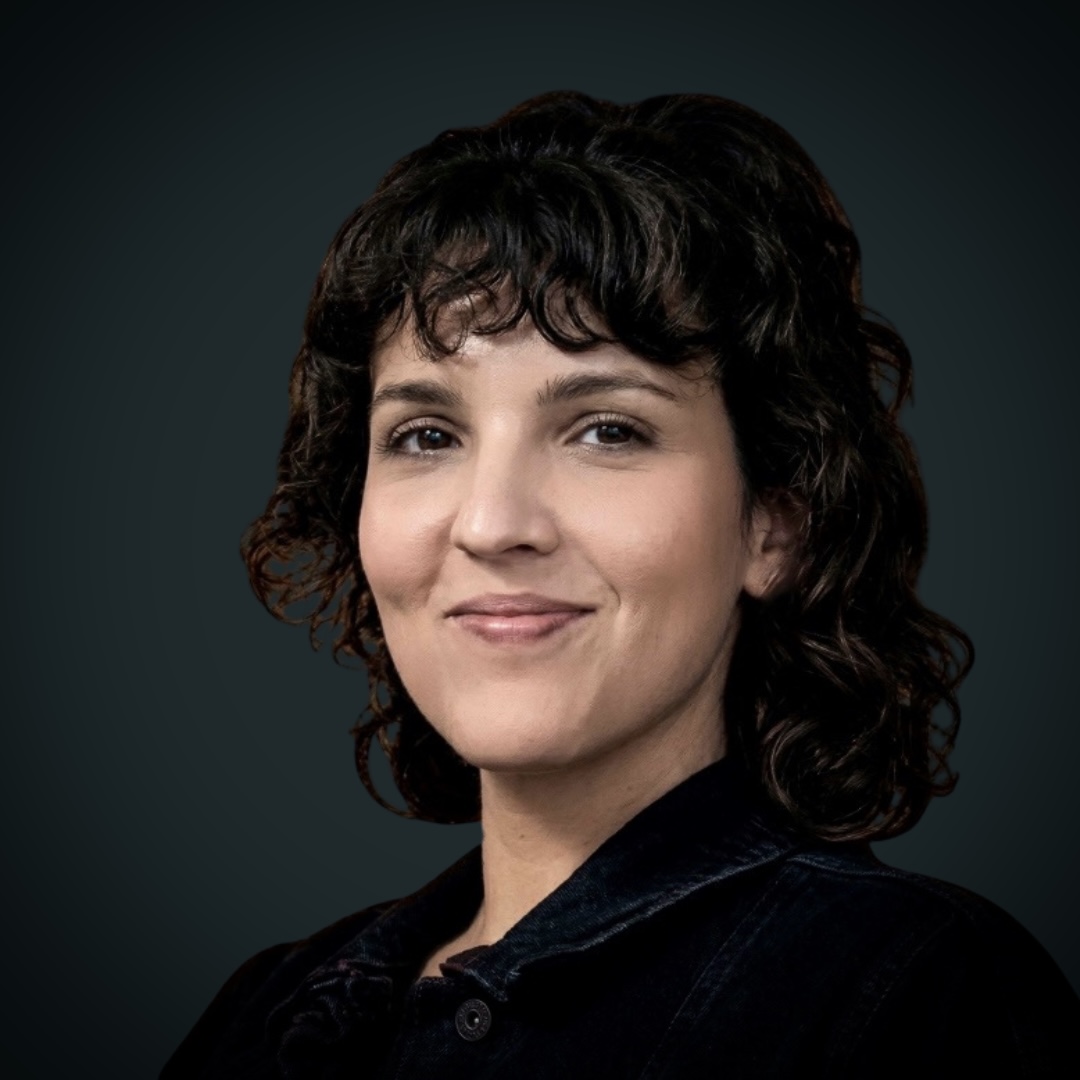
Maša Serdarević, Ilinka’s daughter, has become an indispensable partner in the family’s harm reduction work. Yet collaborating with a parent—or with one’s own child—comes with its own set of challenges, as anyone who has experienced it knows. Maša brings a slightly different perspective to the work and its methods, balancing professional rigor with her personal passions. She is recognized as one of Croatia’s top pole dancers and an Ultra Angel representing the country at the Ultra Music Festival. Despite her demanding training schedule, she dedicates time to harm reduction initiatives, blending advocacy with her artistic pursuits. But for the new generation, aligning work, passion, and personal values remains a delicate balancing act, especially when economic realities and societal pressures pull in different directions. While she was younger, Maša went out primarily for fun. Today, part of her work as a dancer places her in those same club environments, where she is confronted with drug use as both a social and public health reality.
The question of gender becomes more fluid when viewed through the lens of a younger generation—one that moves easily between roles, environments, and identities.
“I can see that nightlife trends have changed significantly from my younger years to today,” she explains, adding: “I have the impression that drug use has become more common among younger generations, which wasn’t the case when I was in high school.”
At the same time, some patterns are shifting in unexpected ways. “It seems that alcohol consumption has somewhat decreased”, Maša notes. Alcohol consumption has declined in Croatia as in most European countries. However, she also points to differences in types of substances used depending on the environment. “It’s very clear that patterns of use vary depending on the type of music”, she says.
Her perspective is shaped by a dual role: at the Tripsitters stand, offering support, and on stage. “Precisely because psychoactive substances are becoming more present, I believe programs like Tripsitters are extremely important, and I’m glad to be part of such an initiative”, says Maša.
Among these programs, drug checking emerges as one of the most contested and potentially transformative tools. For “tripsitter” Maša, its importance is both practical and urgent.
“First and foremost, it allows for the identification of a substance’s composition and purity, which can help users make more informed decisions and reduce risks related to dosing,” she explains. The risks are not hypothetical, she says: “There is a real danger of substances being misrepresented or containing unwanted and potentially dangerous compounds that can have serious consequences.”
Unlike earlier harm reduction measures, which faced sharp resistance, drug checking seems to be entering public discourse with slightly less friction. This is visible through initiatives such as Tripsitters, which has built a following of 5k+ on Instagram and is developing a growing community, alongside a new monthly column in Mixmag Adria and an increasing number of invitations to festivals and workshops.
At the same time, public reception remains divided, with social media comments often taking a critical tone and framing the work as “promotion of drugs,” reflecting the ongoing tension between harm reduction approaches and moral perceptions of drug use. “As for resistance, I feel that it is decreasing”, she says, adding she believes “we will soon see broader implementation of these practices.” Within this evolving system, the collaboration between mother and daughter becomes its own kind of microcosm. “Working with my daughter can be challenging at times,” Ilinka admits. “I am not only her mother, but her boss.” The same applies in reverse: “My son also works here as a therapist. Each of them is different.”
For Maša, the alignment is clear at the level that matters most. “When it comes to values and our approach to work, we are completely aligned,” she says. “We share the same belief that it’s important not to judge, not to stigmatize, and to approach people with understanding and a genuine desire to help.”
Across generations, professions, and social roles, one principle remains constant: the refusal to reduce people to their conditions. In a society still negotiating its relationship with difference, whether in the context of gender, identity, or substance use, that position operates quietly, but persistently. And yet, it is precisely there, in that steady insistence on care over judgment, that change continues to take shape.